
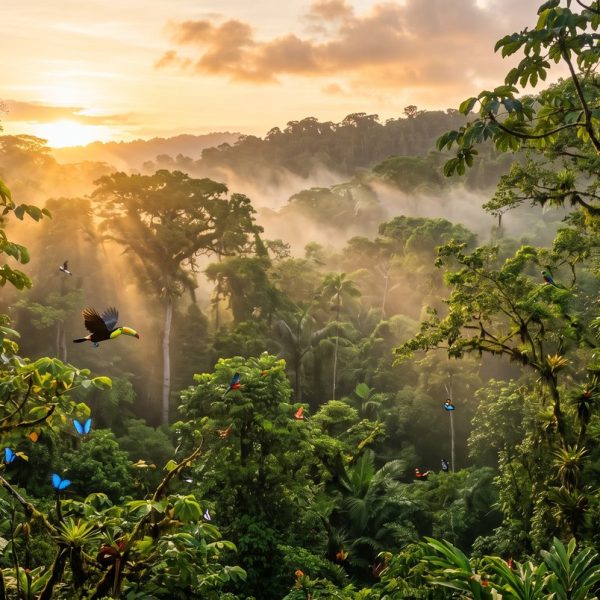
Ask most people what is biodiversity and why is it important, and the answer tends to circle back to something charismatic: a tiger, a coral reef, a rainforest at first light. Those images are true enough, but they hide how ordinary and how vast the subject really is. Biodiversity is the full range of life on Earth, from soil bacteria to blue whales, together with the web of relationships that holds it all in place. The threats to biodiversity are rarely dramatic. They are slow, cumulative and easy to overlook, which is exactly why the losses have been so hard to halt.
What biodiversity actually means
Biologists usually describe biodiversity on three levels. There is the variety of species, the genetic variety within each species, and the variety of whole ecosystems, from wetlands to grasslands to the deep sea floor. Each level supports the others. A forest with many tree species copes with drought and disease far better than a plantation of a single one. A fish population with wide genetic variety adapts faster when the water warms. Strip out enough of that internal variety and a system turns brittle, more likely to tip over when conditions shift.
This matters to people in blunt, practical ways. Pollinating insects underpin a large share of the crops we eat. Wetlands filter water and soften floods. Forests and oceans absorb much of the carbon we release into the air. When those systems fray, the quiet services they provide begin to fail with them, and the bill lands on farms, fisheries and coastal cities.
The main threats to biodiversity
Scientists tend to sort the threats to biodiversity into a handful of drivers, and habitat loss sits at the top of almost every list. When forests are cleared for farmland, wetlands are drained, or coastlines are paved over, species lose the room they need to feed and breed. Overexploitation follows close behind: fishing, hunting and logging that take more than populations can replace. Then comes pollution, from plastic drifting through the ocean to fertiliser runoff that strips lakes of oxygen. Invasive species, carried around the globe by trade and travel, complete the picture by outcompeting or simply eating natives that never evolved to face them.
What makes these drivers so stubborn is that they reinforce one another. A new road does not just pave over habitat. It opens the forest behind it to loggers, hunters and settlers, and it splits a once continuous population into smaller, more fragile pieces. Each fragment holds fewer animals, loses genetic variety faster, and is quicker to blink out after a bad year. Add the fact that most of these pressures rise with economic growth and consumption, and it becomes clear why asking people to simply care more has never been enough on its own.
Where climate change fits in
The climate change impact on biodiversity is a newer pressure, and in some regions it is speeding up. Warming shifts the timing of the seasons, so flowers open before the insects that pollinate them arrive. It pushes species toward the poles and up mountainsides in search of the temperatures they are built for, until there is nowhere higher or cooler left to go. Coral reefs, which shelter roughly a quarter of all marine species, bleach and die when the water stays too warm for too long. Climate change seldom acts alone. It usually lands on habitats already shrunk by agriculture or carved up by roads, and that overlap is what makes it so corrosive.
How much has already been lost
Putting a firm figure on the loss of biodiversity is genuinely hard, because we have never had a complete census of life to measure against. Even so, the direction is not in doubt. Long-running monitoring programmes suggest that the average size of the wild vertebrate populations they track has fallen by a large margin since 1970, and researchers now speak openly about a human-driven extinction event unfolding in the blink of a geological eye. Insects, which are harder to count and easier to ignore, appear to be thinning out across many regions too, with knock-on effects for the birds and mammals that feed on them.
Why the decline is so hard to undo
Extinction is permanent in a way that few environmental problems are. You can, in principle, clean a fouled river or let a cleared forest grow back, but a lineage that took millions of years to evolve does not return once it is gone. International agreements help, although they move slowly, hammered out across dozens of governments and languages where a single vague phrase can undo years of work. It is no accident that environmental diplomacy still leans on the careful tradition that made French the language of diplomacy, where precision on the page can matter as much as goodwill in the room.
What actually slows the decline
None of this means the trend is fixed in place. The clearest gains come from protecting and connecting habitat, giving battered populations room to recover, and pairing that with firm limits on the worst forms of exploitation. Community-led conservation, where the people who live alongside wildlife hold a real stake in keeping it, tends to outlast projects imposed from the outside. Individual choices count at the margins too, and there are concrete steps worth taking, as this guide to protecting endangered species sets out in plain terms. Well-run discussion spaces such as the r/environment community can also help sort durable habits from feel-good gestures.
The story of biodiversity is not only one of decline. It is also a reminder of how much still survives, and how readily much of it responds when given half a chance. The threats are real and stacking up, but so is the evidence that focused, patient effort can pull species back from the brink. The task now is less about knowing what went wrong and more about deciding what we are willing to keep.


